
How Temperature Affects Solar Storage Inverter Performance?
- De Heer Tom
- Handig Artikel

It’s general knowledge that solar inverters take center stage in all solar energy systems, as they help convert the energy absorbed from the sun into usable electricity. However, your inverter’s performance can take a huge blow if it operates continually under harsh conditions, including extreme weather and high temperatures.
How Temperature Affects Inverter Performance? Temperature plays a critical role in the efficiency and longevity of your solar inverter. Whether it’s extreme heat or cold, temperature fluctuations can cause significant issues. High temperatures can cause the inverter to overheat, leading to reduced efficiency or even system failure. On the other hand, extremely low temperatures can lead to underperformance and damage.
Hence, solar users must be properly enlightened on the inverter’s efficiency and the vital factors that eventually degrade it in the long run. Apart from these factors, adverse temperature—either high or low—impacts inverters and leads to numerous issues, all of which we will discuss in this post. Read on to find out how temperature and weather conditions affect your solar inverter efficiency.
Inhoud

Understanding Inverter Efficiency
Aside from temperature and working conditions, other factors that contribute to the optimization or reduction in solar inverter efficiency include:
- Load variability, i.e., the ratio of the capacity of the inverter and the load you power with it. Your inverter can maintain optimal efficiency if you use it to power appliances with a total energy load that is below the inverter’s capacity specifications.
- Input voltage, i.e., the amount of power sent into the inverter from the photovoltaic cells.
- Installation Accuracy, i.e., the level of accuracy or inaccuracy of your solar system installation and the quality of equipment used to connect the inverter to the system.
- The inverter’s age can also affect its efficiency. Inverters and their internal components have specified lifespans before they start to depreciate, reducing efficiency and overall performance.
- Low levels of monitoring and maintenance, especially regarding dust and debris buildups, can also cause rapid degradation in efficiency.
- Excessive humidity can cause condensation within the inverter, which can impair the device’s overall efficiency and result in corrosion and electrical problems.
Temperature Impact on Inverter Efficiency
The internal components of solar inverters are usually the first to suffer damage whenever the device operates above or below the inverter’s optimal temperature specifications. Like all semiconductor-based equipment, inverters are sensitive to excess heat and operate best under cool to moderate temperatures. However, your inverter may also reduce efficiency during times of extreme cold and freezing climatic conditions. Let’s briefly check just how extreme weather conditions affect inverter efficiency.

How High Temperatures Affect Inverter Efficiency
High temperatures add more heat to the ambient temperature of the inverter closure, and the inverter initially tries to reduce internal heat with fans or heat sinks. But when it gets to a certain point, or if the inverter is placed under hot conditions for too long, materials within the inverter will start to degrade.
Insulations may become brittle, metal components in capacitors can fatigue, and solder may expand or crack. When these circumstances begin to occur, the inverter efficiency will drop gradually and may even suffer a total breakdown if it persists for too long.
Other ways in which high temperatures affect solar inverter efficiency include:
- Extremely high weather conditions will increase the inverter’s internal resistance, reducing efficiency as the inverter transfers energy to maintain cool temperatures.
- Components within the inverter may suffer accelerated wear, leading to inevitable malfunctions and reduced efficiency.
- Overheating inverters can also affect the overall temperature of your solar energy setup, reducing the efficiency of connected components, including the solar panels.
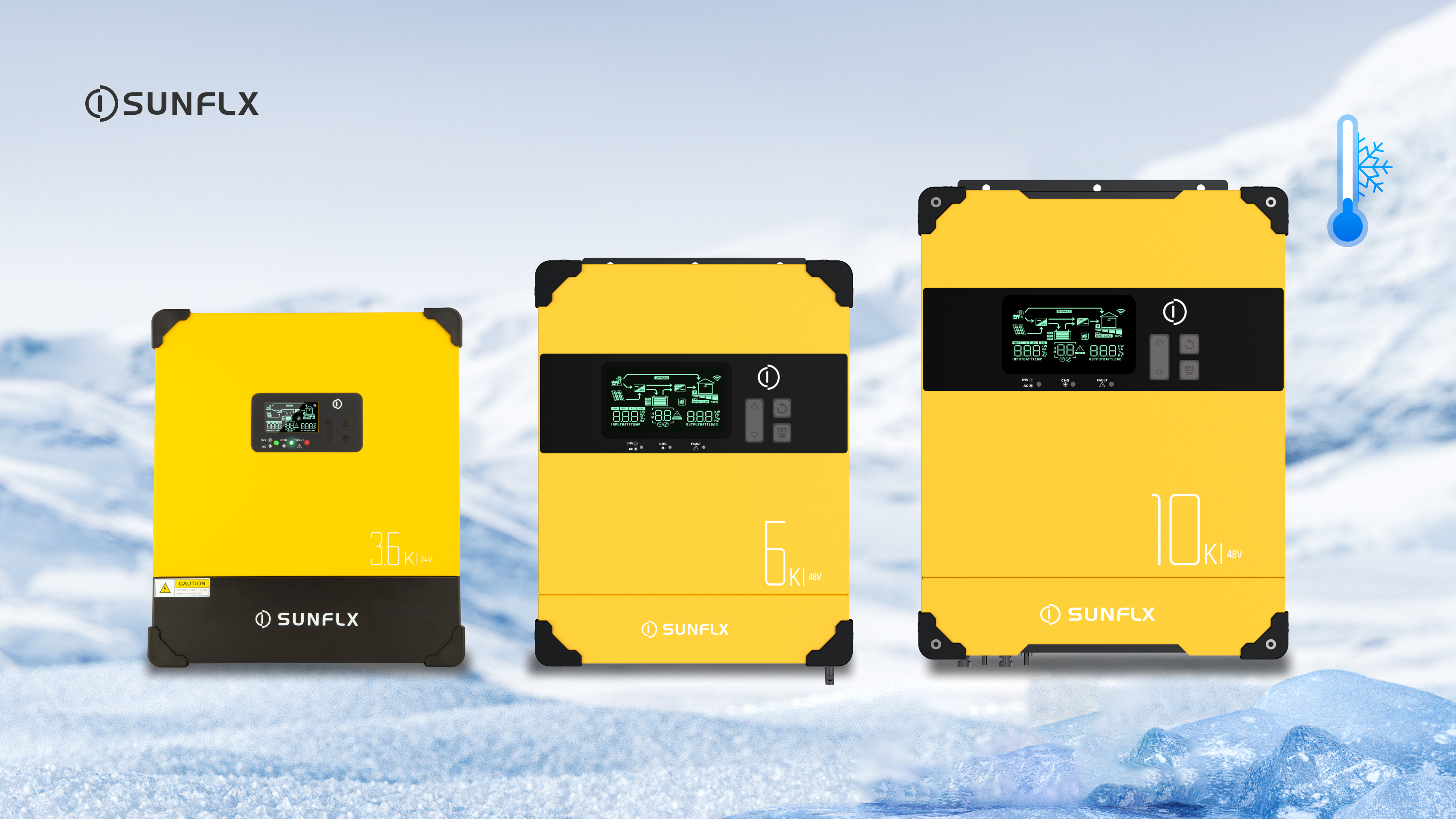
How Low Temperatures Affect Inverter Efficiency
Although solar inverters work best when placed under calm weather conditions, extremely low temperatures can also affect the inverter’s efficiency. A common effect of excess exposure of inverters to harshly cold temperatures is reduced conductivity.
Materials within solar inverters suffer declined conductivity during freezing temperatures, impacting energy transfer. Inverters may also struggle to start (cold start) or function efficiently during frigid temperatures.
Similarly, low temperatures are usually followed by harsh weather events, including heavy rainfall, high winds, snowstorms, or hail. For instance, high winds may physically harm the inverter or any of its parts, and heavy rains may result in floods and electric sparks if the system is not well insulated.
Hail, on the other hand, is terrible for both solar panels and inverters, reducing efficiency and resulting in costly repairs. Lastly, constant exposure of the solar inverter to freezing and thawing cycles can cause gradual degradation of inverter efficiency and physical components.
Performance of Inverters in Different Temperatures
Extreme temperatures on either side of the spectrum, i.e., too hot or too cold, have direct effects on inverter performance. Generally, solar inverters can function properly in a temperature range of -30°C to 60°C. Going below or above this range causes degradation in the inverter’s components, leading to reduced performance and efficiency.
Performance in Hot Climates
Hot climates pose significant challenges for inverter performance. Temperature Affects Inverter efficiency in a profound way. Solar inverters generate heat from within while converting DC to AC electricity, but the excess heat is removed from the device via fans and other ventilators. This innovation guarantees continuous efficiency in the inverter’s functioning. However, when the atmosphere surrounding it is hot, the heat generated within the inverter rises above the level that its ventilators can handle, thus affecting overall performance.
The process highlighted above involving the removal of heat in inverters is usually called heat dissipation. Often, when the inverter faces heat dissipation issues caused by either poor ventilation or excess atmospheric heat, overheating occurs. Overheating is also a major issue affecting the efficiency of inverters. Prolonged exposure to high temperatures can trigger thermal shutdowns or reduce the lifespan of internal components.
Most inverters have built-in heat dissipation mechanisms (fans, heat sinks, and so on); however, these components are only useful to a specified extent. They must be coupled with human activity and intentionality to ensure that solar inverters are placed under temperatures ideal for optimal performance. This way, the solar inverters and other equipment involved in the solar energy system can perform efficiently, generating enough energy needed for your applications.
Performance in Cold Climates
Conversely, cold temperatures and other related weather conditions can inflict adverse effects on your solar inverter, reducing performance and efficiency. Firstly, cold temperatures mean less sunlight, and since the sun is integral to any solar energy setup, this can lead to several problems.
For instance, the solar inverter may refuse to operate as there is no solar energy to power it. Cold start issues are also common in inverters exposed to low temperatures because inverters require more energy to start and stabilize under cold climates.
Constant working hours under temperatures below -30°C can cause internal chemical reactions to slow down, reducing efficiency. This is evident when the inverter fails to properly convert the already small amount of solar power into usable electricity.
Cold climates are also followed by low levels of humidity, which can be dangerous to the internal wiring of your solar inverter. Add an extra layer of heat-retaining walls to increase the atmospheric heat around the inverter during non-optimal temperatures.
In essence, solar inverters, like several other electrical devices, can maintain optimal efficiency only when placed at conducive temperatures. Hot or cold temperatures can damage the device through overheating or humidity, thus reducing overall performance.
Inverter Derating Due to Temperature
Manufacturers of various solar inverter brands are aware of the ideal temperatures for their products. So, they included a feature known as “derating” to increase inverter resistance when operated under unfavorable temperatures.
Derating simply signifies the automatic steps taken by the inverter to reduce heat production and ultimate breakdown due to overheating. The inverter will either cease producing electricity or lower its output in order to derate and reduce heat as it reaches predetermined temperature thresholds. Inverters have varying heat resistance before triggering the derating process, but most inverters will derate when at temperatures between 45°C – 65°C.

To find the derating curve of your solar inverter, you can check through the user manual or contact the manufacturing company for more details. The derating information in manuals shows how the inverter’s performance declines when the atmosphere conditions shift from optimal to non-optimal temperatures.

For example:
Inverter Temperature | Rating | Efficiëntie |
-40°C | Extremely low | 60% |
-10°C | Moderately low | 90% – 95% |
25°C | Optimal | 95% – 100% |
45°C | Moderately high | 80% – 90% |
60°C | High | 65% – 75% |
70°C | Extremely high | <60% |
The table above suggests maintaining temperatures above -10°C and below 45°C to ensure optimal efficiency. An inverter that doesn’t derate is nearly often the consequence of just placing it in a shady place with enough ventilation. Also, understanding the curve peculiar to your solar inverter can help you plan against environmental challenges and ensure reliable operation.

Optimal Operating Temperature for Inverters
As we know, temperatures vary depending on geographic location, climatic conditions, or season. In the same way, inverters vary in terms of their optimal working temperatures. That’s why it is always recommended that you compare the optimal temperature range for inverters with that of your location before buying one. Generally speaking, however, most inverters are designed to operate efficiently between -10°C (14°F) and 45°C (113°F).
This range keeps the inverter running perfectly under temperatures that are neither too hot nor cold. To maintain optimal temperature for your solar inverter, consider the following tips:
- Install inverters in cool locations (use shaded walls rather than the roof).
- Prioritize the proper ventilation system for your inverters. Choose locations with adequate air exchange around the inverter to dissipate heat.
- Add extra ventilation and cooling systems when necessary. Install cooling fans or air conditioning units in areas prone to high temperatures.
- Clean vents and inspect cooling systems periodically to ensure optimal performance and efficiency.
- Keep a minimum distance from nearby inverters or other objects as specified in the user manual.
- Increase the clearance whenever you’re certain that the installation location will experience higher temperatures.
- Strategic placement of solar inverters is also crucial. Arrange inverters in a way that they won’t draw in the warm air of other inverters. Inverters with passive cooling are offset so that heat escapes upwards from heat sinks.
Conclusie
Temperature plays a critical role in the performance and efficiency of solar inverters. High temperatures combine with the heat generated by the inverter while converting DC in PV cells into AC for home and industrial applications. This leads to overheating, reduced efficiency, shorter lifespans, and sudden breakdown. Conversely, extreme cold temperatures can cause cold start problems and reduced energy conversion rates.
When selecting your solar inverter, you must review its derating curve and compare it with your local temperature to obtain a clear picture of how well it will perform. Also, proactive steps like proper installations, cooling systems, and regular maintenance can help ensure the overall efficiency of your solar inverters. So, prioritize temperature management by considering the tips highlighted in this post to guarantee the optimal performance of your solar inverters under ideal temperature ranges.
Veelgestelde vragen
Q1: What Happens if My Inverter Overheats?
Q2: How Can I Monitor My Inverter's Temperature?
Q3: Does My Inverter Need a Cooling System?
Q4: How Can I Tell When My Inverter Is Overheating?
Q5: Does Ambient Temperature Influence My Solar Inverter's Efficiency?

Hallo,ik ben de auteur van dit Bericht. Vanaf 2012 heb ik de CEO van Sunflx Zonne-energie. Met meer dan 10 jaar Zonne-ervaring in het Veld, hielp ik klanten in meer dan 30 landen te stimuleren hun bedrijf. Ik wil mijn kennis kan u helpen om de juiste keuzes te solar producten !
Als je vragen over zonne-energie, gewoon contact met mij op !

Powering the Future: Lithium-ion vs. Lead-Acid Batteries – Which Sparks the Brightest Future?(Update 2026)

Hoe op te lossen Omvormer en accu Communicatie problemen ?

Hoe Lang Doet een Omvormer voor Zonne-energie voor het Laatst? 5 Belangrijke Factoren Die De Uitbreiding Van Zijn Leven

Verschil Tussen Hoge Frequentie (HF) en Lage Frequentie (LF) Omvormer voor Zonne-energie?
Neem Nu Contact Met Ons!
GEMAAKT VAN STERKE
SUNFLX MACHT LANG.